Singapore Oceanarium is Asia’s premier ocean institute, home to over 100,000 marine animals representing more than 1,000 species. Reimagined in 2025 with 22 immersive zones, it blends live naturalistic habitats, cutting-edge digital storytelling, interactive exhibits, and meaningful marine education to reveal the ocean’s past, present, and future. Explore ancient seas, vibrant reefs, mysterious depths, and Singapore’s own coastal ecosystems — all while learning about the delicate balance of marine life and our role in protecting it.
Opened in July 2025, Singapore Oceanarium features 22 thoughtfully curated zones grouped into six thematic chapters: In the Beginning, At the Surface, Sunlight, Into the Deep, The Abyss, and A New Horizon. Each zone combines live animals, immersive technology, digital projections, and interactive elements to tell compelling stories about marine evolution, adaptation, and conservation. From prehistoric seas featuring animatronic models of extinct giants to glowing jellyfish kreisels and the massive 36-metre-wide Open Ocean viewing panel, visitors experience the ocean like never before. The facility emphasizes education — every habitat highlights real scientific insights into biodiversity, climate change impacts, and human-ocean connections.
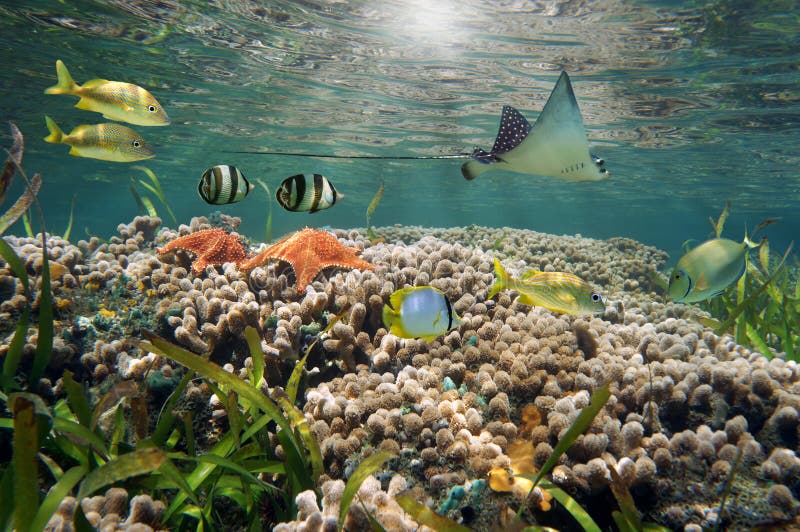
This zone showcases the sun-drenched shallows where the majority of marine species thrive. Explore thriving coral gardens filled with clownfish, angelfish, parrotfish, and schools of damselfish. Watch graceful manta rays and reef sharks glide overhead, while colorful nudibranchs and anemones add splashes of vivid color. Interactive touch pools allow close encounters with local Singapore species like knobbly sea stars and spotted seahorses, highlighting the importance of healthy coral ecosystems for coastal protection and biodiversity.
One of the world's largest viewing panels (36 metres wide and holding 18 million litres of water) reveals the pelagic world of the open ocean. Majestic manta rays, spotted eagle rays, zebra sharks, and thousands of schooling fish swim in a vast, naturalistic environment. This zone demonstrates the scale and freedom of the open sea, with digital projections showing migration patterns and the role of these species in global ocean health. Visitors often spend extended time here, mesmerized by the graceful movements and the sense of infinite blue expanse.
Venture to the twilight and midnight zones where light barely reaches. Discover bioluminescent anglerfish, deep-sea corals, and bizarre creatures adapted to extreme pressure and darkness. Shipwreck and man-made structure replicas provide habitats for octopuses, lionfish, and other resilient species. This zone emphasizes adaptation and survival in harsh conditions, with interactive displays explaining how these animals use bioluminescence for hunting, communication, and camouflage in the perpetual dark of the deep ocean.
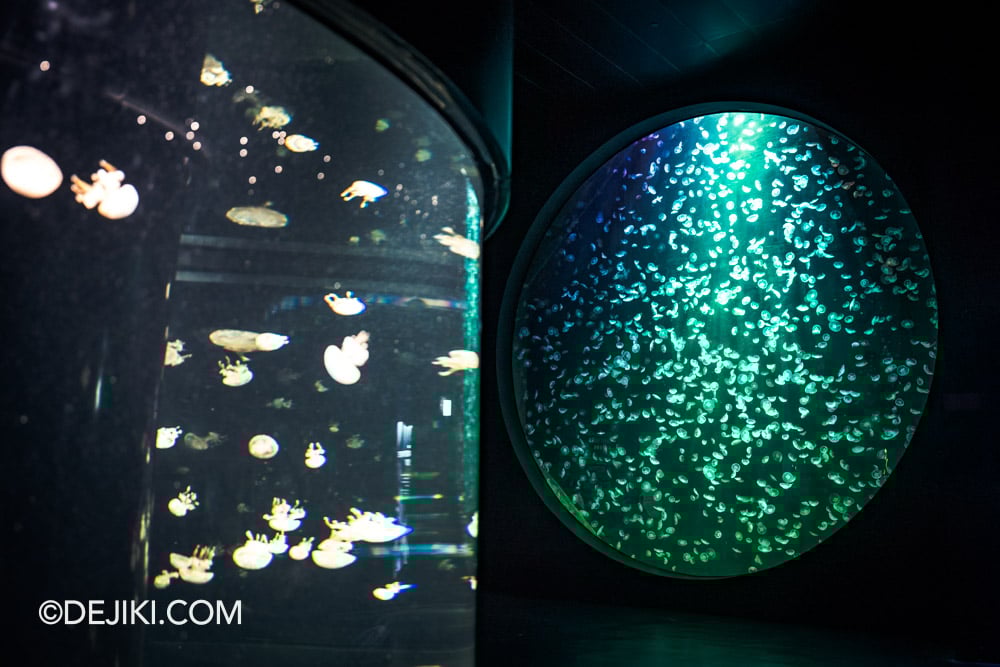
One of the most mesmerizing areas features the world's largest kreisel habitats, where thousands of moon jellies and other sea jellies pulse and drift in hypnotic patterns. Specialized lighting creates an ethereal glow, highlighting their ancient lineage — sea jellies have survived over 500 million years. This zone explores their role as ocean survivors, their graceful yet delicate biology, and the threats they face from plastic pollution and warming waters. The circular flow of the kreisel tanks perfectly mimics natural ocean currents, allowing visitors to witness the endless, meditative motion of these translucent drifters.
These enchanting creatures demonstrate extraordinary adaptations for survival. Longsnout seahorses and ghost pipefish blend seamlessly with sea fans, gorgonians, and seagrass, using their prehensile tails to anchor against currents. Males carry developing young in pouches — a rare role reversal in the animal kingdom. This zone highlights their vulnerability to habitat loss and the importance of protecting seagrass meadows and coral reefs, which serve as critical nurseries for countless marine species.
Singapore Oceanarium is home to over 100,000 animals from more than 1,000 species. From apex predators to tiny invertebrates, each resident contributes to our understanding of marine biodiversity. Through careful habitat design and ongoing research, the institute ensures their well-being while educating visitors about the challenges they face in the wild — from climate change and overfishing to plastic pollution and habitat destruction. Observe their natural behaviors, learn about their ecological roles, and discover how small actions can help protect entire ocean ecosystems.
Sand tiger sharks, hammerheads, zebra sharks, and graceful manta rays represent the diversity of elasmobranchs. These species play crucial roles as top predators, maintaining balance in marine food webs. Observe their elegant swimming patterns and learn how their keen senses help them navigate vast oceans. Conservation efforts focus on reducing bycatch and protecting critical habitats like coral reefs and seagrass beds where these animals feed and reproduce.
Clownfish living symbiotically with anemones, vibrant parrotfish shaping coral reefs, and schools of fusiliers creating shimmering displays — these communities demonstrate complex interdependencies. The zone highlights mutualism, camouflage, and cleaning stations, showing how biodiversity creates resilient ecosystems capable of withstanding environmental changes.
Singapore Oceanarium operates as a true ocean institute, combining live exhibits with active research, breeding programs, and public education. Key initiatives include captive breeding of endangered species, studies on marine debris impacts, coral restoration projects, and collaborations with international organizations. The Green Mark Platinum Zero Energy Research Centre uses solar power to minimize environmental footprint while advancing marine science. Visitors learn how individual choices — reducing plastic use, supporting sustainable seafood, and participating in beach cleanups — contribute to global ocean health. Through storytelling and interactive displays, the institute inspires action to preserve marine biodiversity for future generations.
Located at Resorts World Sentosa, Singapore Oceanarium offers an enriching experience for all ages. The facility is fully wheelchair accessible with family-friendly facilities, including stroller parking and quiet zones. Allow 3–4 hours to comfortably explore all 22 zones and interactive exhibits. Photography is encouraged (no flash in sensitive areas to avoid disturbing animals). Wear comfortable shoes for walking and bring water to stay hydrated. The oceanarium is open daily, providing consistent access to this world-class marine education destination.
Opening Hours: Daily 10:00 AM – 5:00 PM (last entry 4:00 PM)
Tips for an optimal experience: Start early to avoid crowds in popular zones like Ocean Wonders and Open Ocean. Take time to read interpretive panels and use interactive touchscreens for deeper insights into each habitat.
Last updated: March 22, 2026
This is an independent educational website dedicated to marine science and ocean awareness. We collect minimal data and prioritize user privacy.
Voluntary contact form submissions (name, email, message) and basic anonymized analytics (browser type, pages viewed, approximate location via IP — no personal identification).
To respond to inquiries and improve educational content. No marketing emails, no data selling.
Only essential cookies for site functionality. No advertising or third-party tracking cookies.
No sharing with third parties except when legally required.
Contact us to request access, correction, or deletion of any submitted data.
Questions? Use the contact form below.
Curious about a specific zone, marine species, or conservation topic? We'd love to hear your questions or feedback!